
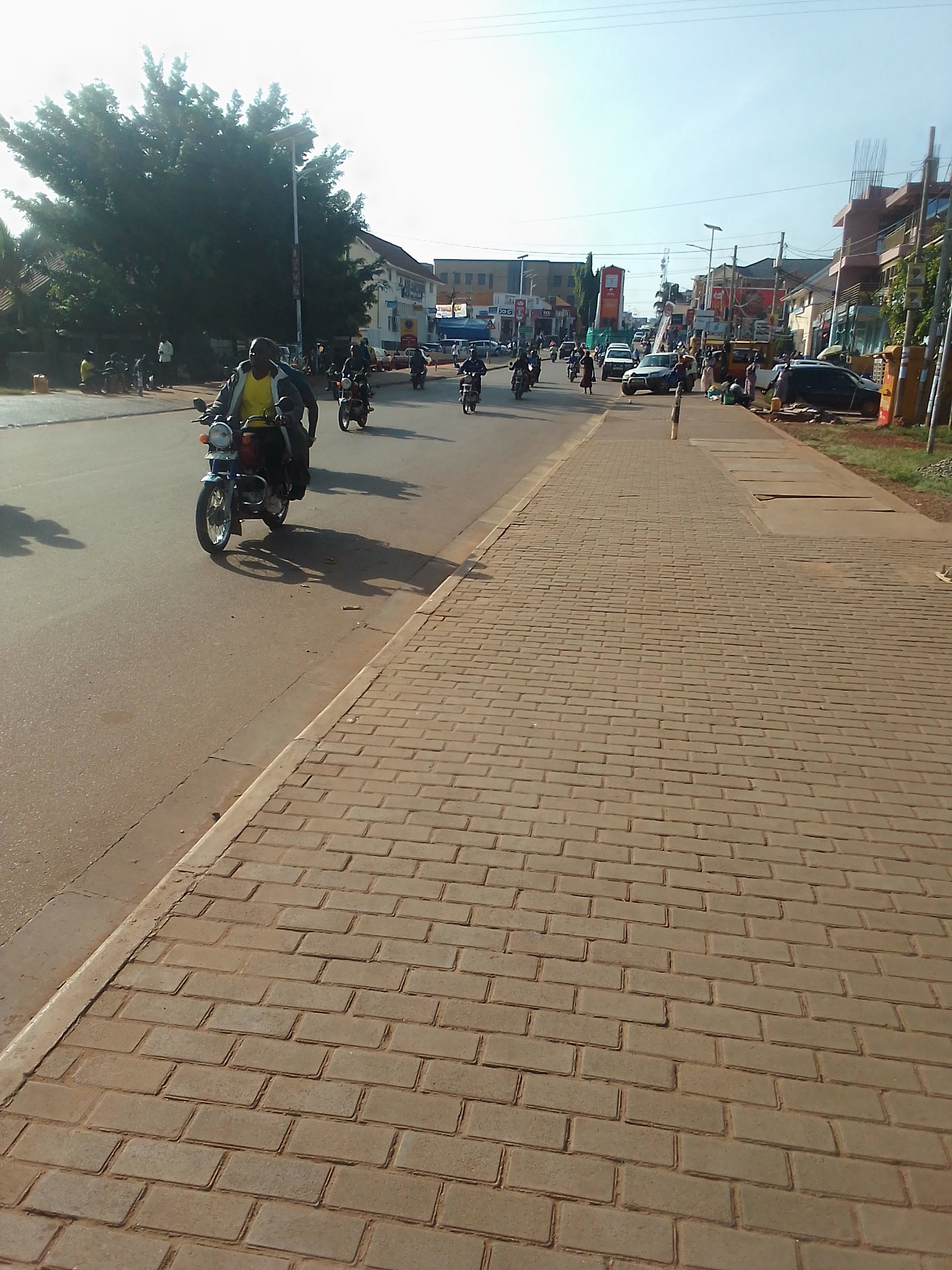
GULU CITY, December 27, 2025 — The leadership of the Gulu City Council Boda-Boda Association has announced plans to form a cooperative aimed at addressing challenges facing its members, particularly poor financial management that has left many riders struggling after retirement.
Boda-bodas remain the dominant means of public transport in and around Gulu City, employing thousands of residents.
According to the association’s spokesperson, Johnson Odong, financial illiteracy is the biggest challenge confronting most boda-boda riders. The association has a membership of more than 10,000 motorcyclists.
Odong explained that after meeting daily expenses such as food, fuel and motorcycle hire, most riders earn a minimum profit of Shs 20,000 per day.
“The biggest problem is that many riders do not know how to put their money to proper use. For most of our members, there is little or no improvement in their lives or those of their families, even after riding a boda-boda for 20 to 30 years,” Odong said.
He added that poor financial management has negatively affected the education of riders’ children.
“Most of our children stop at secondary school because paying fees at university or tertiary institutions becomes a challenge due to a lack of savings and investment. That is why we are in the process of forming a cooperative. We are currently waiting for a certificate from the Ministry of Trade,” he said.
Odong noted that the cooperative will provide a platform for members to save and borrow money, enabling them to pay university fees for their children and invest in other ventures such as coffee farming.
Many boda-boda riders currently belong to informal savings groups, commonly known as Village Savings and Loan Associations [VSLAs], where they save daily or weekly amounts ranging from Shs 5,000 to Shs 50,000.
Simon Apire, a boda-boda rider operating at Gulu Main Market, said many of his colleagues fail to invest their savings due to excessive spending on alcohol and multiple relationships.
Apire, who also serves as head of enforcement at the market’s boda-boda stage, explained that some riders have spouses who do not engage in any income-generating activities.
“When your wife stays at home waiting for what you earn, the family becomes vulnerable, especially in cases such as accidents. Some of us have the illusion that the motorcycle is the only ‘shop’ that provides everything, and we forget to invest in other activities like farming,” Apire said.
He added that growing crops such as groundnuts, maize and cassava helps reduce daily household food expenses.
“Because of farming, I am able to save more money and invest in assets like oxen, which generate income that I use to pay school fees for my children,” he said.
Apire welcomed the idea of forming a cooperative, saying it would enable riders to engage in long-term saving and investment.
“Currently, our borrowing is limited to between Shs 100,000 and Shs 500,000, but with a cooperative, once we come together, we can do much better,” he said.
Gulu City Commercial Officer George Nicholas Kidega observed that many informal businesses, including boda-boda operations, operate in survival mode without clear future goals.
He said his office has partnered with Enterprise Uganda to sensitise informal business operators, particularly on record-keeping, to help them grow and plan sustainably.
https://thecooperator.news/boda-boda-union-promotes-electric-motorcycles-across-uganda/
Buy your copy of thecooperator magazine from one of our country-wide vending points or an e-copy on emag.thecooperator.news
-

-

-

-


