
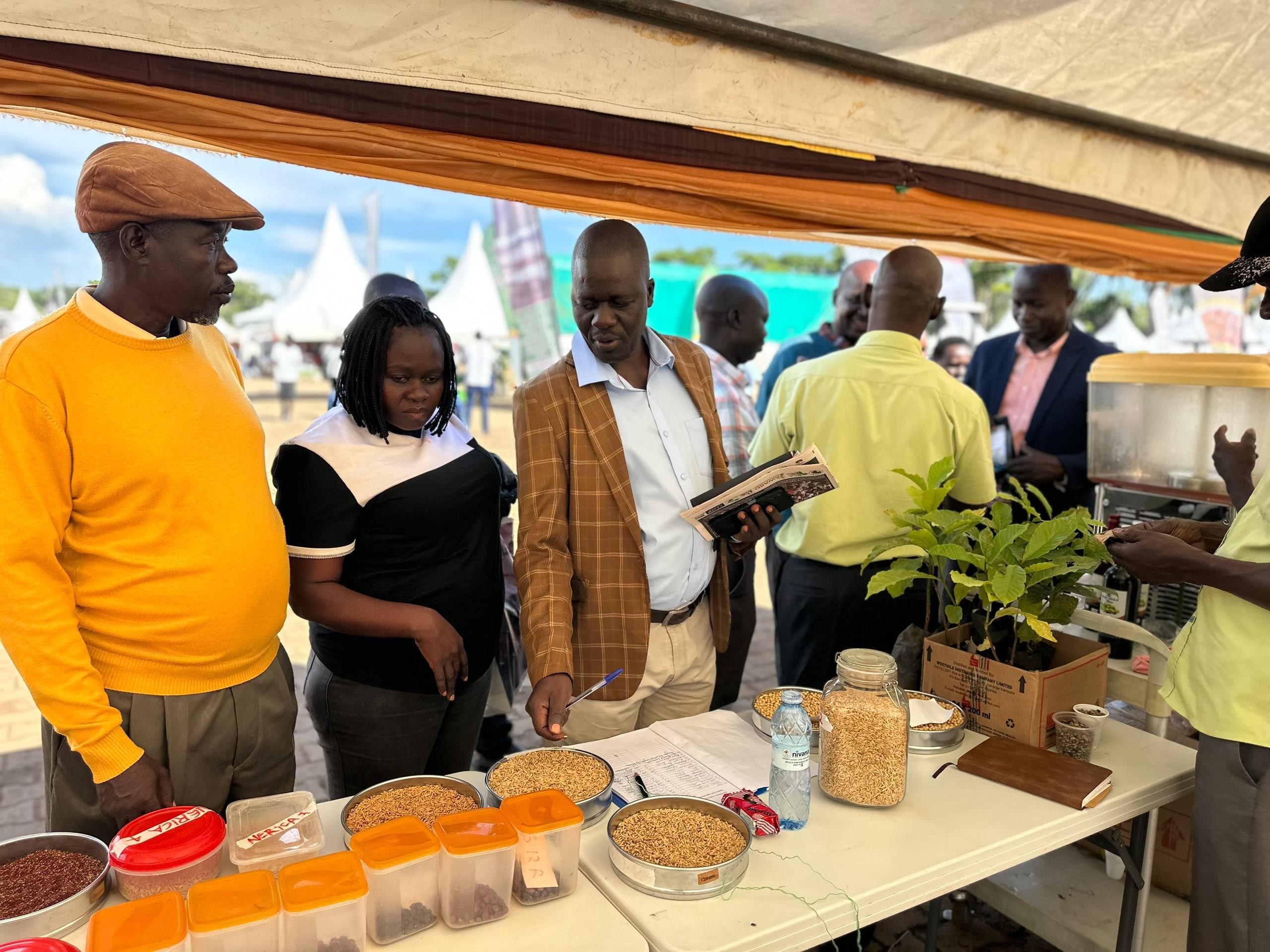
GULU, March 30, 2026 — Farmers in Northern Uganda have been encouraged to embrace research-driven agricultural technologies as a critical pathway to improving productivity, strengthening climate resilience, and increasing household incomes.
According to Frank Mugabi, Head of Communications at the National Agricultural Research Organisation [NARO], such technologies offer proven, high-yielding and climate-resilient solutions that reduce risks, lower production costs, and improve both output and quality.
“When farmers adopt research-driven technologies, they move from guesswork to precision, thereby producing more, losing less, and earning better from every acre they cultivate,” Mugabi said.
He made the remarks while addressing the media during the 5th Northern Uganda Agricultural Show, currently underway at Kaunda Grounds in Gulu City. The show, which opened on March 26, concludes today, March 30, 2026.
The exhibition has attracted farmers, researchers, agribusiness players and development partners, all working towards advancing agricultural transformation in the region.
NARO is a key participant at the event, with its institutes — including the National Livestock Resources Research Institute [NaLIRRI], the National Coffee Research Institute [NaCORI], and the Ngetta and Abi Zonal Agricultural Research and Development Institutes [ZARDIs] — showcasing a wide range of innovations tailored to Northern Uganda’s farming systems.
At the NARO exhibition stall, visitors are engaging with technologies in apiculture, improved pasture systems, resilient seed varieties, shea nut value addition, agro-processing, and coffee production suited to local conditions.
In addition to the displays, NARO scientists are conducting practical training sessions aimed at equipping farmers and agripreneurs with hands-on skills to adopt and benefit from these innovations. The sessions are designed to ensure that research outputs translate into tangible impact at farm level.
Shea nut value addition has emerged as a major highlight of the show, reflecting its economic importance in Northern Uganda, where the shea tree is widely abundant. Researchers are demonstrating improved processing techniques to enhance product quality and market value, opening up new income opportunities, particularly for women and youth.
Coffee is also taking centre stage, underscoring its growing role as a key income earner for Ugandan farmers. Once largely associated with Central and Western Uganda, coffee is now being promoted in Northern Uganda as a viable commercial enterprise.
Through NaCORI, NARO is showcasing improved coffee varieties and climate-suitable agronomic practices, while also training farmers in crop establishment, pest and disease control, and post-harvest management to enhance quality and competitiveness.
Mugabi emphasised the importance of farmers engaging with nearby research institutions to fully benefit from available innovations.
“We call upon farmers across Northern Uganda to take full advantage of platforms like this to learn, adopt and apply proven technologies. Research is a launchpad for agricultural transformation, but farmers must embrace these innovations and turn them into productive enterprises that improve livelihoods,” he said.
He further underscored the role of value addition in boosting farmer incomes, noting that NARO has developed a range of prototype value-added products from various agricultural commodities that farmers can replicate.
He explained that value addition not only increases earnings but also reduces post-harvest losses and enhances livelihoods.
Using shea nut as an example, Mugabi highlighted its strong global demand due to its unique skincare properties, but warned that the tree — abundant in Northern Uganda — is increasingly under threat from indiscriminate cutting.
“Every time you cut down a shea nut tree, you cut down potential income,” he said, adding that Ngetta Zonal Agricultural Research and Development Institute [Ngetta ZARDI] in Lira City is conducting research to shorten the maturity period of shea trees.
He described the shea tree as a “treasure that must be jealously protected”, noting that more information is available to visitors at the NARO exhibition stalls.
Organisers of the agricultural show were commended for promoting research, innovation and farmer engagement as key drivers in addressing food security, building climate resilience and advancing sustainable agricultural development in the region.
Buy your copy of thecooperator magazine from one of our country-wide vending points or an e-copy on emag.thecooperator.news
-

-

-

-


