
KAMPALA, July 24, 2026 — Governors of central banks from across the East African Community [ EAC ] have reaffirmed their commitment to establishing a single regional currency by 2031, despite uneven progress by Partner States in meeting the required macroeconomic convergence targets.
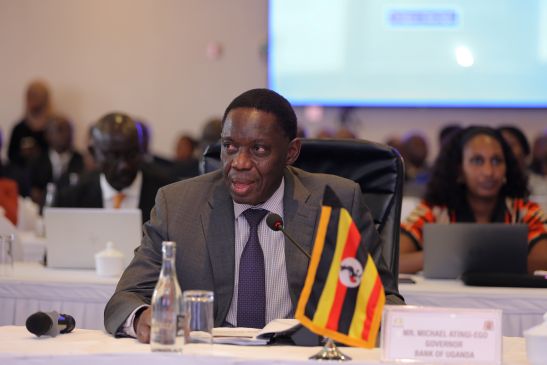
The commitment was made during the 29th Ordinary Meeting of the East African Community Monetary Affairs Committee [MAC], held at Lake Victoria Serena Golf Resort & Spa near Kampala on Friday and chaired by the Governor of the Bank of Uganda, Michael Atingi-Ego, who is the current Chairperson of the Committee.
The meeting brought together governors and senior officials from the central banks of Uganda, Kenya, Tanzania, Burundi, South Sudan, Somalia and Rwanda, as well as representatives from the EAC Secretariat. The Governor of the Central Bank of the Democratic Republic of the Congo, Andre Wanes Nkualoloki, was unable to attend and sent his apologies.
Regional economy remains resilient
The Committee noted that the meeting took place against a backdrop of heightened global economic uncertainty, driven by rising international oil prices and increased shipping costs linked to the ongoing conflict in the Middle East. Although global investment in artificial intelligence-related technologies remains strong, world economic growth is projected to slow to 3.0 per cent in 2026, down from 3.5 per cent in 2025, while inflation is expected to rise because of higher energy prices.
Despite these challenges, the Committee observed that the East African economy is expected to remain resilient. Regional economic growth is forecast at 5.2 per cent in 2026, significantly above the projected 4.3 per cent average for Sub-Saharan Africa.
Average headline inflation across the region fell to 6.7 per cent during the 2025/26 financial year, compared with 9.6 per cent in the previous financial year. Inflation is expected to remain moderate, provided tensions in the Middle East gradually ease.
The Committee also expressed confidence that regional currencies will remain broadly stable, supported by diversified foreign exchange inflows and ongoing reforms in domestic foreign exchange markets.
Progress towards the Monetary Union
The meeting reviewed progress in implementing the revised roadmap for the establishment of the East African Monetary Union [EAMU] and the introduction of a single EAC currency by 2031.
The Committee noted significant achievements by Partner States’ central banks, including the modernisation and harmonisation of monetary policy frameworks, improved data compilation and analytical capacity, stronger risk management systems, enhanced policy coordination through information sharing and joint research, expanded use of the East African Payment System, and continued investment in human capital development across central banks.
However, members acknowledged that progress towards meeting the convergence criteria has been uneven. Although Partner States have undertaken substantial macroeconomic reforms, none has yet fulfilled all four primary convergence criteria required for the Monetary Union.
The Committee said the findings highlighted the continuing challenge of maintaining macroeconomic stability while financing critical infrastructure projects amid an increasingly volatile global economic environment.
To strengthen regional resilience, members called on Partner States to diversify sources of international reserves through domestic gold purchases and increased remittance inflows, while enhancing regional policy coordination.
The Committee also agreed to accelerate implementation of the EAMU roadmap by establishing a peer review mechanism to strengthen macroeconomic surveillance and by developing operational frameworks to implement the EAC Five-Year Development Strategy [2026/27–2030/31].
Cross-border payment reforms gather pace


The Governors reviewed progress on implementing the EAC Cross-Border Payment System Masterplan, which was approved during the Committee’s 28th meeting as the blueprint for modernising and integrating regional payment systems.
The Masterplan aims to reduce transaction costs, shorten settlement times, improve interoperability between national payment systems and eliminate fragmented payment infrastructure, thereby promoting seamless cross-border transactions, financial inclusion, innovation and increased intra-EAC trade.
The Committee noted that implementation had already begun, with annual work plans developed, priority projects identified and financial and technical resources being mobilised to support execution.
Financial sector remains stable
The Committee observed that the EAC financial sector remains stable and resilient, supported by adequate capital and liquidity buffers across the region.
However, members warned that cyber security threats continue to pose significant risks to financial stability and agreed to strengthen regional cooperation and implement appropriate measures to mitigate these emerging threats.
At the close of the meeting, the Governors expressed their appreciation to the Bank of Uganda for successfully hosting the meeting and for the hospitality extended to delegates.
The 29th Ordinary Meeting of the East African Community Monetary Affairs Committee concluded in Kampala on July 24, 2026.


Buy your copy of thecooperator magazine from one of our country-wide vending points or an e-copy on emag.thecooperator.news
-

-

-

-


