
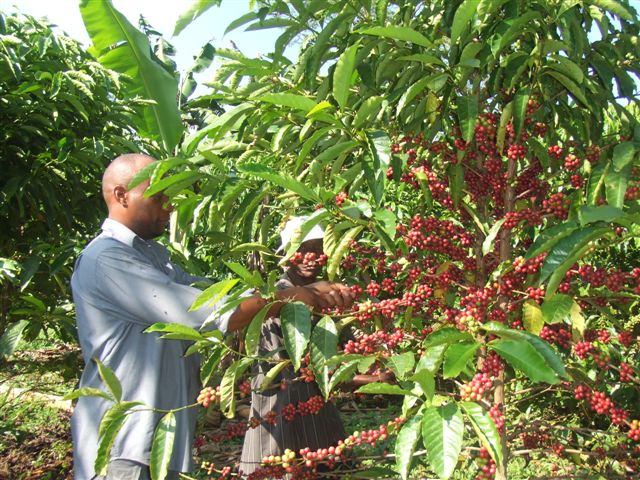
KAMPALA, April 1, 2026 — Climate change is set to significantly disrupt global arabica coffee production, with up to 20 percent of current growing areas projected to become unsuitable by 2050, according to a new report by Rabobank.
Arabica coffee, prized for its flavour and quality, requires specific conditions including moderate temperatures, reliable rainfall and partial shade. These conditions are largely found within the equatorial “coffee belt”, where leading producers such as Brazil, Colombia, Ethiopia and Honduras dominate global exports.
However, rising temperatures and shifting rainfall patterns are expected to alter where coffee can be grown successfully, posing risks to supply chains and long-established coffee origins.
The report warns that climate variability is already increasing the frequency of droughts, heatwaves and heavy rainfall, contributing to volatile yields in major producers such as Brazil and Colombia. If the trend continues, buyers may be forced to diversify sourcing into less familiar regions.
By mid-century, suitability for arabica cultivation is expected to decline sharply in several key countries. In Colombia, the share of coffee grown in unsuitable areas could rise from 7 percent to 18 percent, while suitable areas shrink. Honduras faces one of the steepest declines, with suitable zones projected to drop from 53 percent to just 12 percent of current production.
Brazil, the world’s largest producer, is also expected to see a reduction in suitable growing areas, although it will retain a relatively large share compared to other countries.
In contrast, East Africa could emerge as a major beneficiary. Ethiopia is projected to see improved growing conditions, with suitable areas expanding and higher-altitude regions becoming more viable for cultivation.
The shifting climate is also expected to affect coffee quality and flavour. Changes in temperature, rainfall and altitude could alter the distinctive taste profiles associated with specific origins, particularly in Latin America, where chocolate and caramel notes dominate.
This could pose challenges for specialty coffee brands that rely on origin identity, such as “100% Colombian” products, as maintaining consistent flavour profiles becomes more difficult.
Meanwhile, East African coffees—known for their fruity and floral characteristics—may gain prominence as conditions improve, offering new opportunities for exporters and buyers seeking diversification.
Despite the risks, the report highlights ongoing adaptation efforts across the sector. Farmers are increasingly adopting irrigation, agroforestry and climate-resilient varieties to cope with changing conditions. Some are also shifting towards hardier coffee species such as robusta.
Major companies are investing in long-term solutions. Nestlé has committed significant funding to regenerative agriculture, while Starbucks is developing climate-tolerant coffee varieties and distributing millions of resilient seedlings.
Experts say the future of coffee will depend on how quickly the industry adapts. This includes investing in climate-smart farming, strengthening supply chains, and building partnerships in emerging production regions.
“The next decade will be decisive,” the report notes, warning that maintaining both supply stability and coffee quality will require proactive planning and sustained investment across the value chain.
https://thecooperator.news/uganda-coffee-players-form-national-body-to-boost-global-competitiveness/
Buy your copy of theCooperator magazine from one of our countrywide vending points or an e-copy on emag.thecooperator.news


