
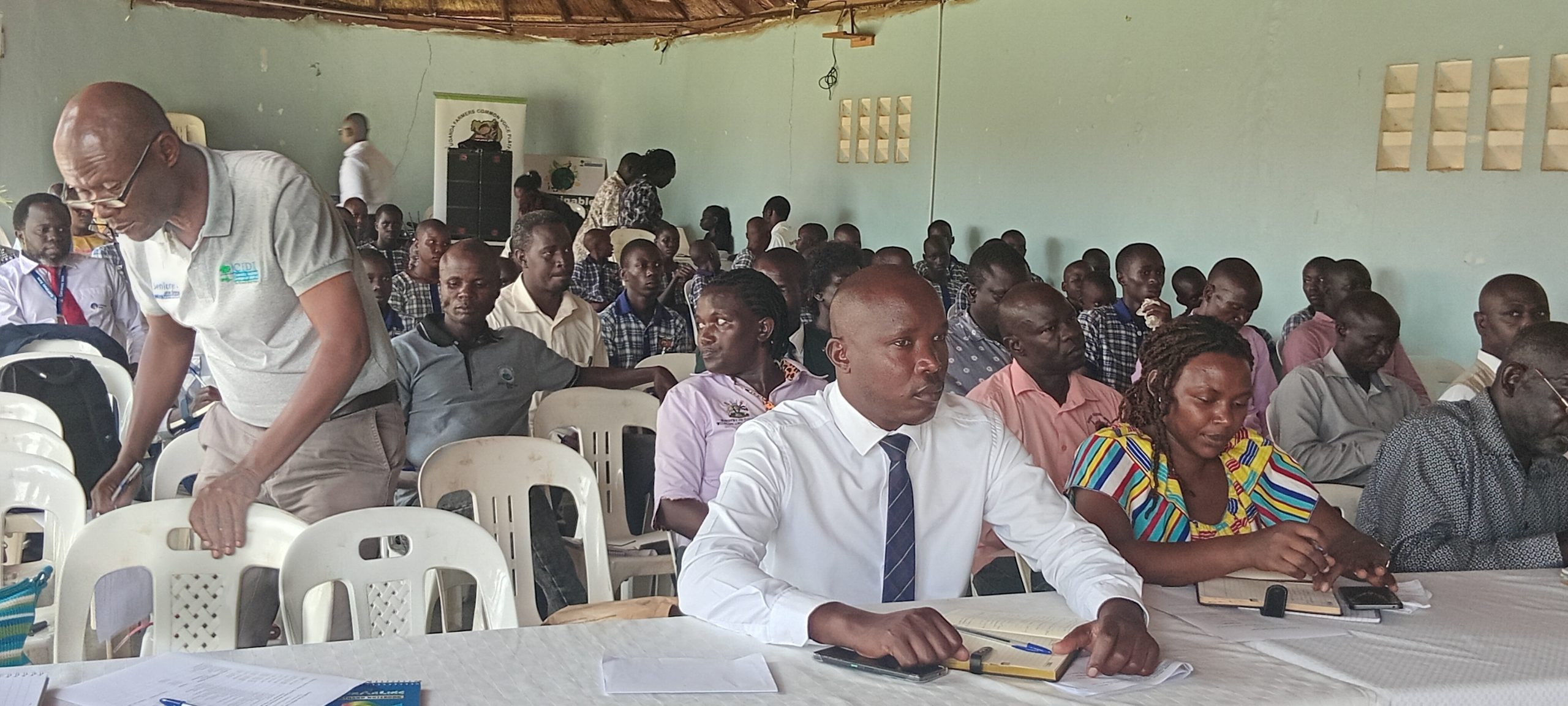
SOROTI CITY, April 29, 2026 — Calls for urgent action to restore degraded ecosystems, reduce pollution, and protect natural resources dominated Mother Earth Day celebrations in Soroti City, amid growing concern over environmental degradation in Uganda.
Mother Earth Day was commemorated last Wednesday under the theme “Our Power, Our Planet”, aimed at raising awareness and promoting environmental protection.
Samuel Musisi Lukanga, Team Leader at Community Integrated Development Initiatives [CIDI], emphasised the urgent need to restore degraded ecosystems, combat rising pollution, and safeguard natural resources in Soroti City.
He said these interventions are critical to protecting public health, livelihoods, and the environment for future generations.
“As we live today, we must act responsibly to secure our future,” Musisi said, urging residents to embrace environmental conservation.
Francis Ediau, Soroti City Environment Officer, noted that the event goes beyond awareness and calls for practical action, including waste reduction, support for sustainable products, and a shift to renewable energy.
“This should concern all of us. We need to protect the air that we breathe,” Ediau said.
He added that environmental management is an individual responsibility, warning that the increasing occurrence of landslides and disease reflects the consequences of neglecting environmental duties.
Ediau also observed that many people are reluctant to adopt appropriate technologies and instead expect enforcement from authorities. He stressed that funding should prioritise water and environmental programmes that protect water resources.
Richard Ocen Apollo, Director of Teso Bees Development Organisation, called on the government, financial institutions, farmers, and schools to invest in integrated agroecology and ecosystem restoration programmes.
He also urged support for policy reforms and stronger enforcement mechanisms to promote sustainable environmental initiatives.
“The future of Uganda, particularly the Teso region’s ecosystems and food systems, is closely tied to these efforts. Agroecology offers practical and scalable pathways to restore degraded landscapes,” Ocen said.
Inviolah Nambi, Advocacy Officer at CIDI, highlighted the continued loss of local seed sovereignty among farmers in Teso, noting that unpredictable rainfall has increased vulnerability in agricultural production.
She said CIDI has identified declining yields due to soil degradation, which has negatively affected agricultural output. She added that farmers are increasingly resorting to harmful chemical fertilisers in an attempt to restore soil fertility.
Nambi called for agroecology to be institutionalised as the primary agricultural extension model.
“This should be prioritised by agricultural officers, production officers, and lead farmers,” she said.
Simon Ddembe, Coordinator of African Climate Reality, said the organisation will continue building partnerships with financial institutions and UN agencies in Uganda, and collaborate with the Forest Sector Support Department [FSSD] in the Ministry of Water and Environment. FSSD assumed the roles of the National Forestry Authority [NFA] following Parliament’s passage of the National Forestry and Tree Planting [Amendment] Act, 2024.
“We will mobilise communities, support training, promote soil testing, and encourage the adoption of clean and smart energy solutions,” Ddembe said.
Stephen Olupot, Oxfam DRM Consortium Manager, urged the public to reflect on their contributions to environmental management.
He encouraged learners to plant trees and nurture them throughout their lives, describing it as a valuable practice that schools should adopt, with support from parents.
Proclaimed by the United Nations in 2009, Mother Earth Day recognises the earth as our common home and underscores the importance of preserving biodiversity and sustaining human livelihoods.
Buy your copy of thecooperator magazine from one of our country-wide vending points or an e-copy on emag.thecooperator.news
-

-

-

-


