
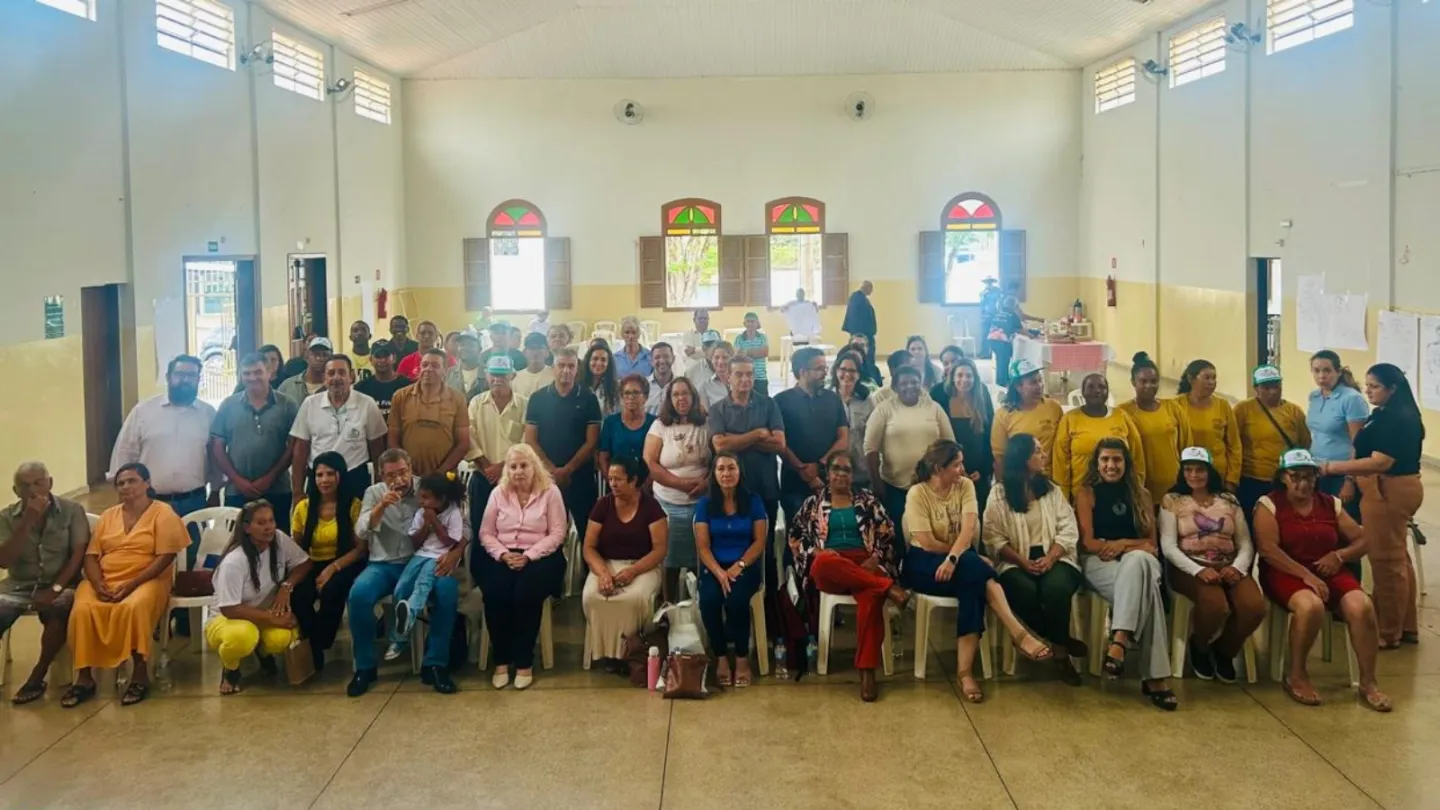
MINAS GERAIS, February 21, 2026 – Coffee cooperatives, smallholder farmers and rural trade unions in Brazil’s main coffee-growing region have stepped up efforts to improve workplace safety and health, following a series of training sessions led by the International Labour Organisation [ILO].
The capacity-building activities, held recently in Santo António do Amparo, Minas Gerais, were organised through the ILO’s Vision Zero Fund in collaboration with Brazil’s Ministry of Labour and Employment and the National Confederation of Rural Salaried Workers [CONTAR], with co-financing from the European Union.
More than 80 small producers and rural workers joined representatives from five coffee cooperatives operating across Minas Gerais, Brazil’s leading coffee-producing state. Together, the cooperatives provide services to around 30,000 members.
Cooperatives trained as ‘agents of prevention’
The first two-day session focused on strengthening the role of cooperatives in promoting occupational safety and health [OSH] and fundamental labour rights among their members. Participants were trained to assess workplace risks, integrate safety standards into management systems and develop action plans aimed at continuous improvement.
Leandro Costa Marinho, a labour inspector at Brazil’s Ministry of Labour, said empowering cooperatives was key to delivering long-term change across the sector.
“Strengthening the capacity of cooperatives in occupational safety and health is essential to achieve sustainable improvements in the coffee sector. When cooperatives become agents of prevention, we can expand the culture of safety to thousands of small producers more effectively,” he said.
Focus on risks faced by smallholders
A separate one-day session targeted smallholder farmers and rural workers, addressing risks including pesticide exposure, the use of agricultural machinery and repetitive physical strain. The training also covered compliance with Brazil’s National Regulatory Standard No. 31 (NR-31), which sets out health and safety requirements for agricultural work.
Laíssa Pollyana Carmo, project co-ordinator at CONTAR, said the initiative placed prevention and fundamental rights at the heart of the coffee industry.
“Empowering rural workers about their rights and occupational safety is an investment in lives. As CONTAR, we celebrate initiatives like this one that place prevention and fundamental rights at the centre of the coffee sector’s agenda,” she said.
Participants said the sessions had improved their understanding of workplace risks and labour rights. Several cooperative representatives committed to implementing newly developed OSH action plans and expanding awareness-raising activities among members and local producers.
New guidance launched
The event also marked the launch of two new ILO training manuals for coffee cooperatives in Brazil, available in Portuguese. Developed with financial support from the European Union, the guides provide practical advice on strengthening occupational safety and health and promoting fundamental principles and rights at work throughout the coffee supply chain.
Juliana Brandão, National Project Officer at ILO-Brazil, said the initiative would continue beyond the initial training.
“These trainings, grounded in the Vision Zero Fund’s research, provide cooperatives and producers with the tools they need to create safer workplaces. We will continue providing technical assistance to ensure lasting results,” she said.
Sector faces ongoing challenges
Brazil is the world’s largest producer and exporter of coffee, employing an estimated 300,000 workers directly in the sector. However, informality and exposure to occupational hazards remain significant concerns, particularly among small-scale producers and temporary workers.
By working with cooperatives, farmers and trade unions, the ILO and its partners aim to strengthen local capacity to prevent accidents, improve compliance with safety regulations and advance respect for workers’ rights across Brazil’s coffee industry.
Buy your copy of thecooperator magazine from one of our country-wide vending points or an e-copy on emag.thecooperator.news


