
KAMPALA, October 10, 2026 — Africa’s 100 largest banks have recorded a 23 percent increase in combined Tier 1 capital to a record US$ 155 billion, supported by stronger economic growth, improved profitability and more favourable exchange rates, according to the 2026 ranking by African Business.
The total, based on banks’ Tier 1 capital converted into US dollars, surpasses the US$ 126.1bln recorded in 2025 and the previous high of US$ 135.3bln in 2022. Combined assets also rose by 16 percent to US$ 1.8 trillion from US$ 1.56trn a year earlier.
The figures mark a significant recovery for the continent’s largest lenders after several years in which currency depreciation, inflation and subdued economic growth weighed on their performance in dollar terms. Tier 1 capital is now almost 50 percent higher than the US$ 101.6bln recorded in 2019.
The recovery comes against an improving economic backdrop. The International Monetary Fund estimates that sub-Saharan Africa’s economy grew by 4.5 percent in 2025, its fastest rate in a decade, while median inflation declined from 4.8 percent at the end of 2024 to 3.4 percent a year later.
However, the IMF expects regional growth to ease to 4.3 percent in 2026, with higher oil, gas and fertiliser prices threatening to renew inflationary pressures.
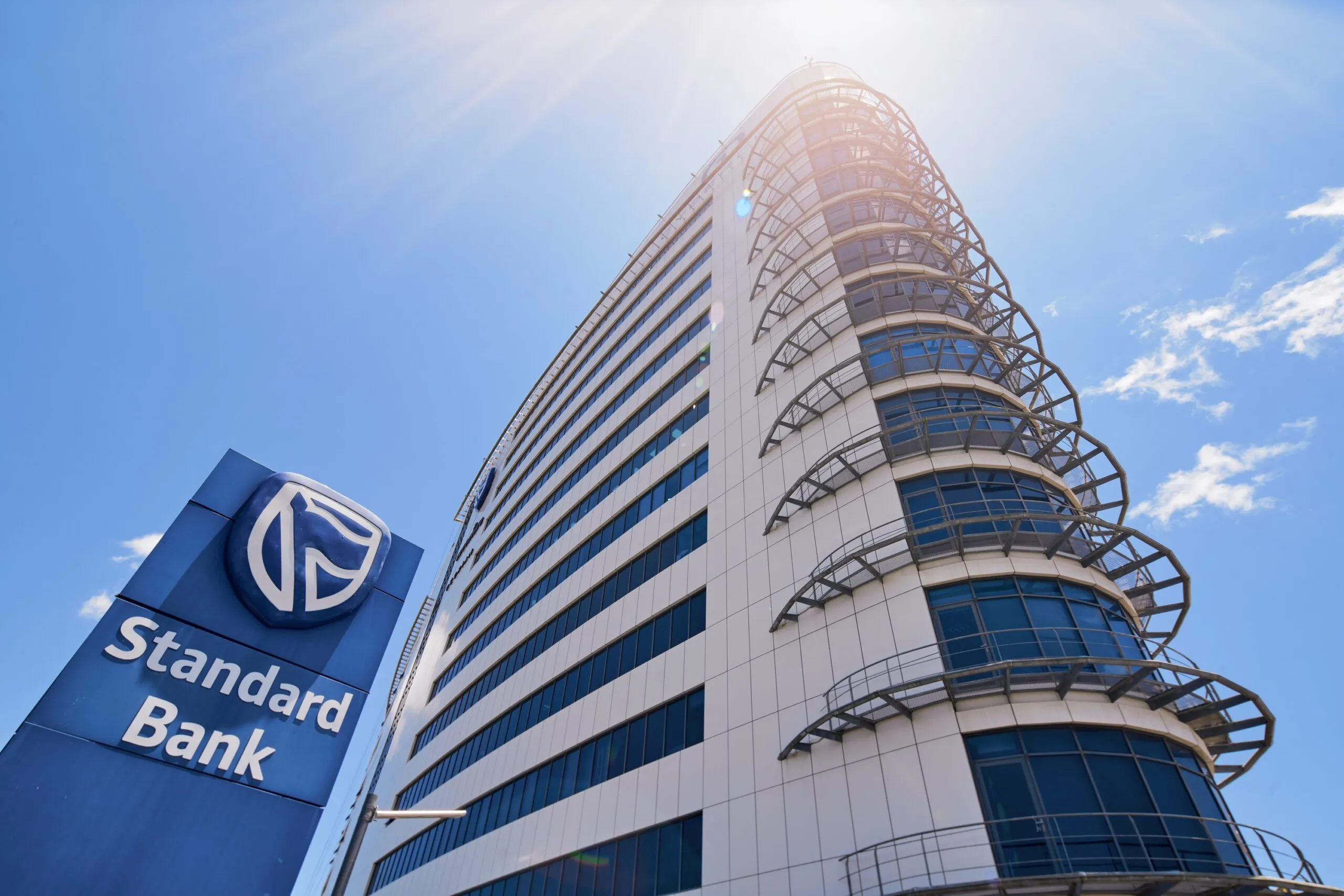
Standard Bank widens lead
Standard Bank increased its Tier 1 capital from US$13.2bln to US$ 15.7bln over the past year, while assets reached US$ 217.7bln and net profit stood at US$ 3.4bln, the highest figures among commercial banks in the ranking.
Its operations outside South Africa generated 40 percent of group headline earnings, with Angola, Ghana, Kenya, Mauritius, Nigeria, Tanzania, Uganda and Zambia among its key contributors.
The bank has also continued investing in digital services as competition from financial technology companies intensifies. Its South African digital retail client base grew by 9 percent in 2025.
That momentum continued into 2026, with Standard Bank reporting a 10 percent increase in headline earnings to 26.1 bln rand, equivalent to about US$ 1.6bln, in the first half of the year. Return on equity reached 22 percent.
National Bank of Egypt recorded one of the ranking’s largest increases among the leading institutions, with Tier 1 capital rising from US$ 7.3bln to US$ 10.5bln. The bank reported assets of US$ 160.1bln and profit of US$ 2.6bln.
Attijariwafa Bank increased its capital from US$ 6.25bln to US$ 7.68bln and now operates in 27 countries, serving more than 12 million customers.
South Africa’s FirstRand retained fourth place, increasing capital from US$ 5.7bln to US$ 6.54bln. Absa and Morocco’s Banque Centrale Populaire remained fifth and sixth, respectively.
Nedbank moved above Egypt’s Banque Misr into seventh place with capital of US$ 5.52bln, while Bank of Africa-BMCE Group climbed from 11th to ninth with US$ 3.84bln.
The upper end of the ranking remains heavily concentrated geographically: all the top 14 banks are based in South Africa, Egypt, Morocco or Algeria.
Capitec challenges traditional banking model
South Africa’s Capitec Bank emerged as one of the ranking’s strongest performers, climbing eight places to 14th after increasing Tier 1 capital from US$ 1.72bln to US$ 2.68bln.
The rise is notable given the bank’s comparatively small balance sheet. Capitec reported assets of US$ 16.5bln, against US$ 217.7bln at Standard Bank, US$ 109.5bln at Absa and US$ 104.8bln at FirstRand, yet generated more than US$ 1bln in profit.
The bank has 25.8mln active clients, including 15.3mln app users, and has expanded beyond its original low-cost retail banking model. Retail banking accounts for 41 percent of headline earnings, while insurance contributes 27 percent, fintech services 26 percent and business banking 5 percent.
The contrasting strategies of Standard Bank and Capitec illustrate how African lenders are competing for growth. Standard Bank relies on scale, corporate banking and a broad continental footprint, while Capitec has built its position through streamlined retail services, technology and mass-market customer acquisition.
Both approaches demonstrate the advantages established banks retain over smaller financial technology competitors, including access to capital, large deposit bases, corporate relationships and regulatory expertise. Their challenge is to combine those strengths with the lower costs and convenience increasingly demanded by customers.
Nigerian banks regain ground
Nigerian banks recorded a substantial recovery, with their combined Tier 1 capital rising from US$ 10.3bln in 2025 to US$ 15.2bln in the latest ranking.
United Bank for Africa climbed five places to 15th, increasing capital from US$ 1.7bln to US$ 2.7bln. Access Bank, however, slipped from 14th to 17th despite growing its capital from US$ 2bln to US$ 2.6bln. Zenith Bank fell four places to 20th even after adding US$ 600mln to its capital base, illustrating how rapid growth across the ranking can push individual banks down the table.
Guaranty Trust Bank rose five places to 25th, with capital increasing from US$ 1.1bln to US$ 1.77bln. Stanbic IBTC recorded the largest climb among returning banks in the top 100, jumping from 80th to 45th after increasing capital from US$ 290mln to US$ 735mln.
The improvement follows years in which repeated depreciation of the naira eroded the dollar value of Nigerian banks’ balance sheets, leaving lenders in Africa’s most populous country trailing several South African and North African rivals in international comparisons.
Regulatory reforms are also reshaping the sector. The Central Bank of Nigeria introduced minimum capital requirements of 500bln naira, equivalent to about US$ 375mln, for commercial banks with international licences, 200bln naira for national banks and 50bln naira for regional banks.
The central bank reported that 30 banks had met the revised requirements ahead of the 31 March deadline, with lenders raising funds through rights issues, public offerings and other capital-raising measures.
Stronger capital bases could give Nigerian lenders greater capacity to finance domestic businesses and expand across Africa. Access Bank, for example, completed its acquisition of National Bank of Kenya from KCB Group in May 2025, strengthening its presence in East Africa.
Egypt and Morocco consolidate regional influence
Egypt was another major contributor to the increase in banking capital. The country’s banks in the top 100 held a combined US$ 31bln in Tier 1 capital, up from US$ 22.6bln in 2025.
National Bank of Egypt accounted for much of the increase, while Commercial International Bank rose from 17th to 12th place after increasing capital from US$ 1.91bln to US$ 3.13bln.
Egypt had 20 banks in the ranking, with National Bank of Egypt, Banque Misr and Commercial International Bank all featuring among the top 12.
Morocco maintained a different but equally significant position. Despite having a smaller economy and population than Egypt, the country placed three institutions in the top 10: Attijariwafa Bank in third, Banque Centrale Populaire in sixth and Bank of Africa-BMCE Group in ninth.
Moroccan banks in the top 100 held combined capital of US$ 23.3bln, up from US$ 20.3bln a year earlier, reflecting the influence of lenders that have built extensive networks across francophone Africa.
North Africa retains largest capital base
The regional figures show that the improvement extended beyond the largest individual banks.
North Africa remained the continent’s strongest banking region, with combined Tier 1 capital rising 21 percent to US$ 70.5bln from US$ 58bln. Its banks held more than US$ 830bln in assets.
Southern Africa retained second place, with capital increasing 17 percent to US$ 47.8bln and total assets reaching US$ 647.9bln.
West and Central Africa recorded the largest percentage increase, with combined capital rising 32 percent to US$ 19.6bln. East Africa, despite strong economic performance across several of its economies over the past decade, recorded more modest growth, taking the region’s combined capital to US$ 16.9bln.
The threshold for entry into the top 100 also increased. Abu Dhabi Commercial Bank-Egypt, ranked 100th, had US$ 277mln in Tier 1 capital, compared with US$ 222mln required to secure the final position in 2025.
New entrants included National Bank of Kenya at 38th, I&M Bank at 41st, Bank of Khartoum at 47th and GCB Bank at 56th.
The ranking also highlights the strengthening presence of Egyptian, Kenyan and Nigerian lenders. Four of the 11 biggest risers were Egyptian, while three were Kenyan and two Nigerian.
Nevertheless, changes in rankings should be interpreted with caution. Exchange-rate movements and differences in financial reporting dates can affect dollar-denominated capital figures, meaning that a sharp rise in a bank’s position does not necessarily reflect equivalent growth in its underlying business.
Bigger balance sheets raise pressure to finance growth
The stronger capital position raises questions about how effectively African banks will channel their resources into productive investment.
Businesses across the continent continue to face difficulties obtaining affordable credit, particularly small and medium-sized enterprises, while infrastructure development and cross-border trade require substantial financing. Hundreds of millions of Africans also remain outside the formal banking system.
Digital banking, mobile platforms, agency networks, digital identification and automated credit assessments are helping lenders reach customers who were previously too costly to serve through conventional branches.
At the same time, banks are increasingly pursuing growth beyond their home markets. South African lenders are expanding northwards, Moroccan groups have established extensive networks across francophone Africa, Nigerian banks are pursuing regional acquisitions, and Kenyan institutions are building businesses across East Africa.
The expansion could support the African Continental Free Trade Area by improving access to the payments, foreign exchange, working capital, guarantees and trade finance needed to move goods and services across borders.
However, financing constraints remain substantial. African Development Bank research estimated unmet demand for African trade finance at between US$ 74bln and US$ 92bln in 2024. Commercial banks intermediated an average of only 23 percent of African trade between 2020 and 2024, while foreign exchange liquidity remained a major constraint.
The record capital and asset growth recorded in 2026 gives the continent’s largest banks greater financial capacity to address these shortages. Whether that translates into broader financial inclusion, increased business investment and stronger intra-African trade will be a critical test of the sector’s next phase of growth.
Buy your copy of thecooperator magazine from one of our country-wide vending points or an e-copy on emag.thecooperator.news
-

-

-

-


