
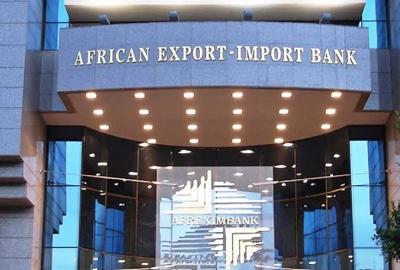
KAMPALA, June 25, 2026 — The African Export-Import Bank [Afreximbank] has launched its 2026 African Trade Report, arguing that escalating global geopolitical tensions and supply chain disruptions could be transformed into long-term opportunities for industrial growth and economic resilience across Africa.
The report, themed “Leveraging Geopolitics for Trade and Industrialisation in Global Africa,” provides an assessment of recent trade and economic developments within Africa and the global economy, set against the backdrop of the 2025 operating environment.
It highlights Africa’s continued economic resilience despite mounting external pressures, noting that while global economic growth slowed to 3.4 per cent in 2025 and is projected to ease further to 3.1 per cent in 2026, Africa’s real GDP growth strengthened from 3.4 per cent in 2024 to 4.5 per cent in 2025.
According to the report, Africa’s merchandise trade expanded by 6.1 per cent to approximately US$1.5 trillion, while average inflation fell sharply from 21.6 per cent in 2024 to 13.1 per cent in 2025. It attributes the improvement to tighter macroeconomic management, ongoing policy reforms, and support from development finance institutions.
Commenting on the findings, Dr Yemi Kale, Group Chief Economist and Managing Director of Research and Trade Intelligence at Afreximbank, said Africa is at a critical turning point.
“Geopolitical tensions and economic fragmentation are reshaping global trade patterns, but they also present a historic opportunity for the continent,” Kale said. “By strategically leveraging these shifts, Africa can build a more resilient, competitive and inclusive economic future.”
He urged African economies to strengthen regional value chains, deepen industrial capacity, expand access to trade finance, and accelerate continental integration.
“It is imperative for the continent to act decisively,” he added. “Africa cannot afford to delay.”
The report also draws attention to a persistent trade finance gap, estimated at around US$ 74 billion in 2025, which continues to constrain export performance. It warns that limited foreign exchange liquidity and the decline in correspondent banking relationships are restricting Africa’s trade and industrial potential.
It further notes that global shipping disruptions and shifting logistics routes are increasing delivery times and raising freight costs, particularly affecting African economies that remain dependent on imported inputs and external markets.
In response, the report outlines key priorities, including accelerated implementation of the African Continental Free Trade Area [AfCFTA], expansion of digital payments through the Pan-African Payment and Settlement System [PAPSS], and reforms to the global financial architecture.
It highlights the growing role of African financial institutions in supporting resilience, noting that Afreximbank, a founding member of the Alliance of African Multilateral Financial Institutions [AAMFI], disbursed US$ 17.5 billion in 2024 and is targeting a doubling of intra-African trade finance by 2026.
The report says PAPSS is already reducing transaction costs and lowering reliance on foreign currencies across the continent.
It concludes that Africa’s ability to capitalise on current global disruptions will depend on stronger industrial ecosystems, deeper intra-African trade, expanded trade finance, and sustained investment in infrastructure and digital payments systems.
“The imperative now is to act with ambition and urgency,” the report states.
https://thecooperator.news/sp-global-ratings-assigns-afreximbank-bbb-a-2-investment-grade-rating/
Buy your copy of thecooperator magazine from one of our country-wide vending points or an e-copy on emag.thecooperator.news


